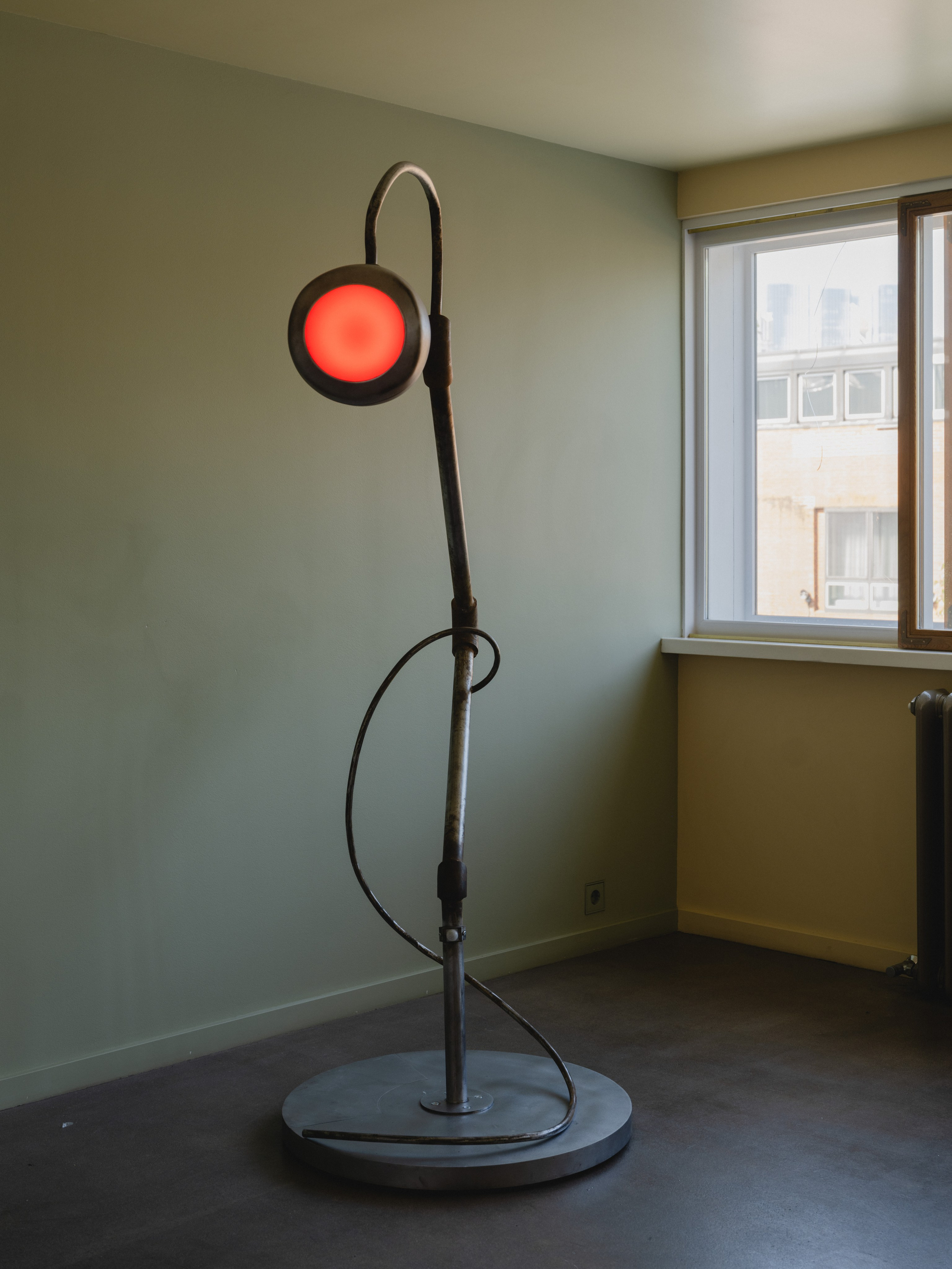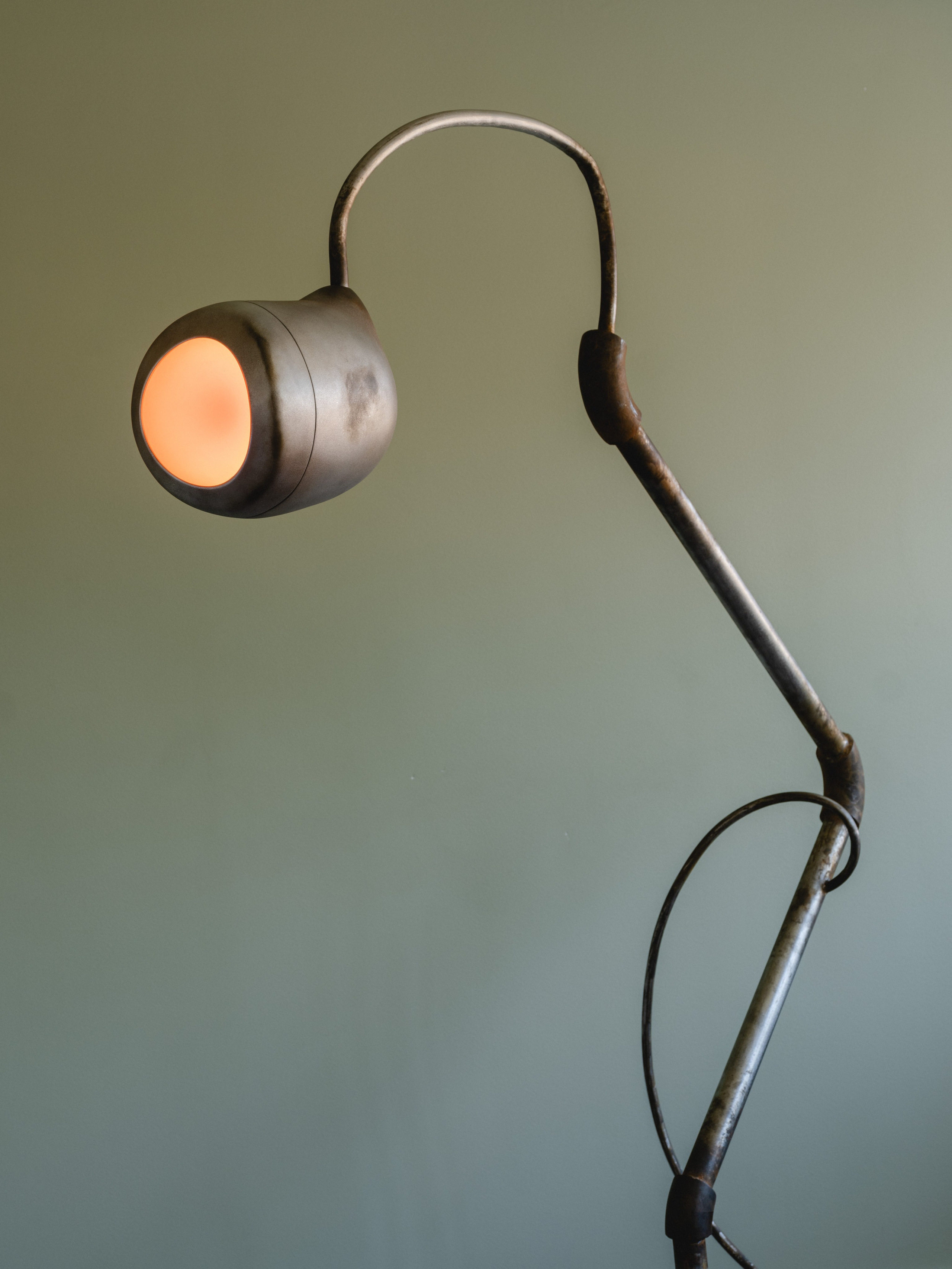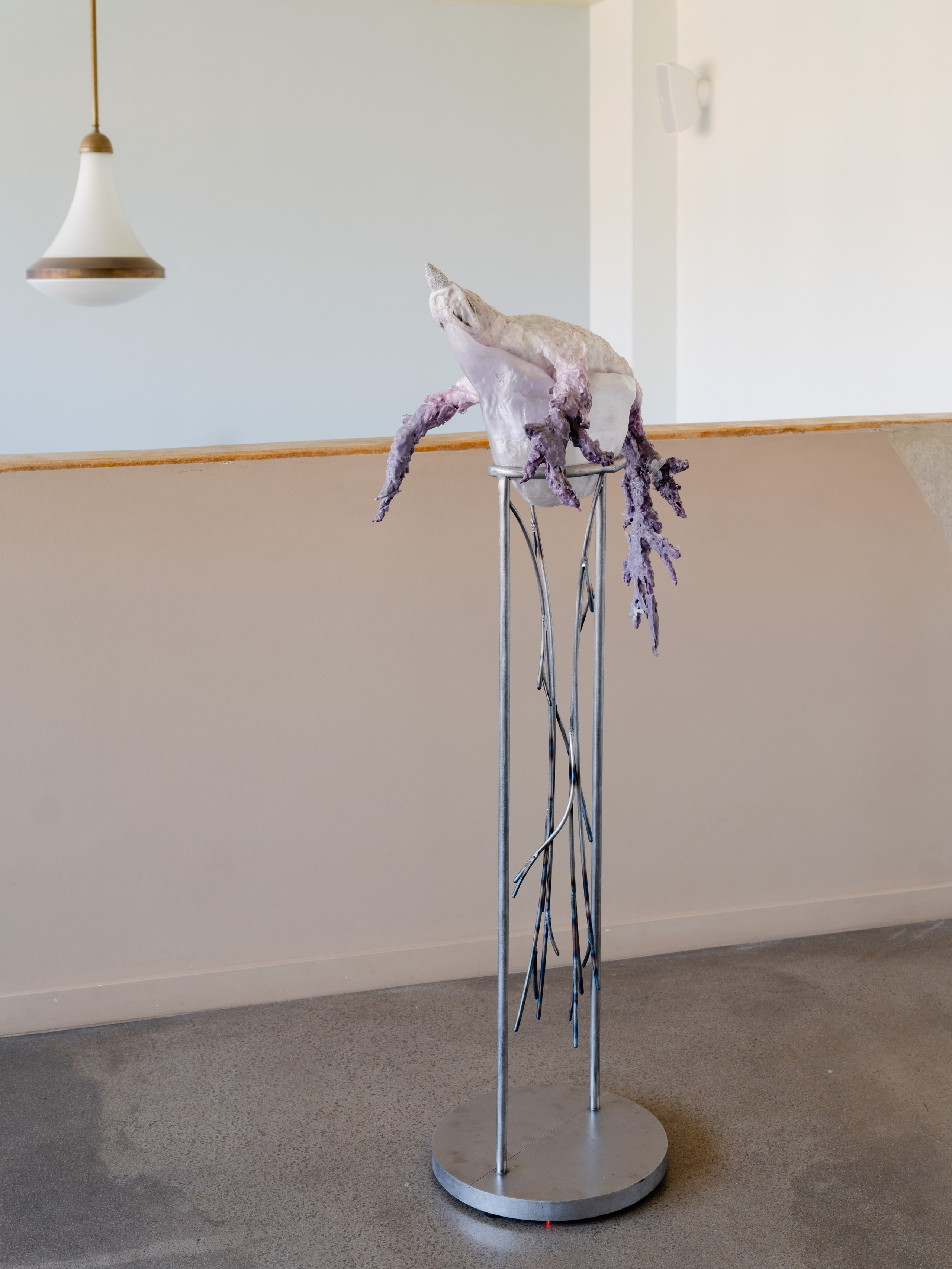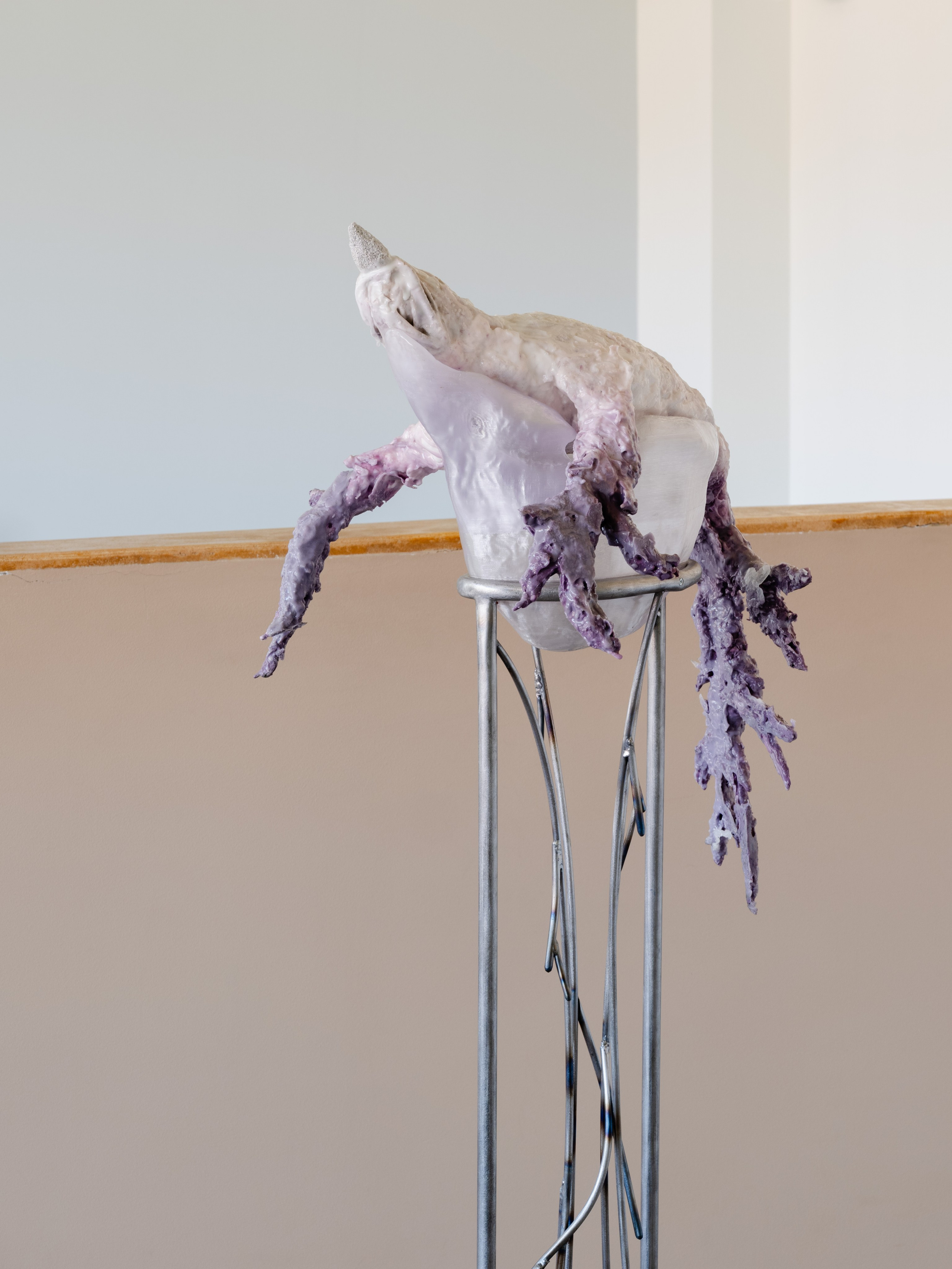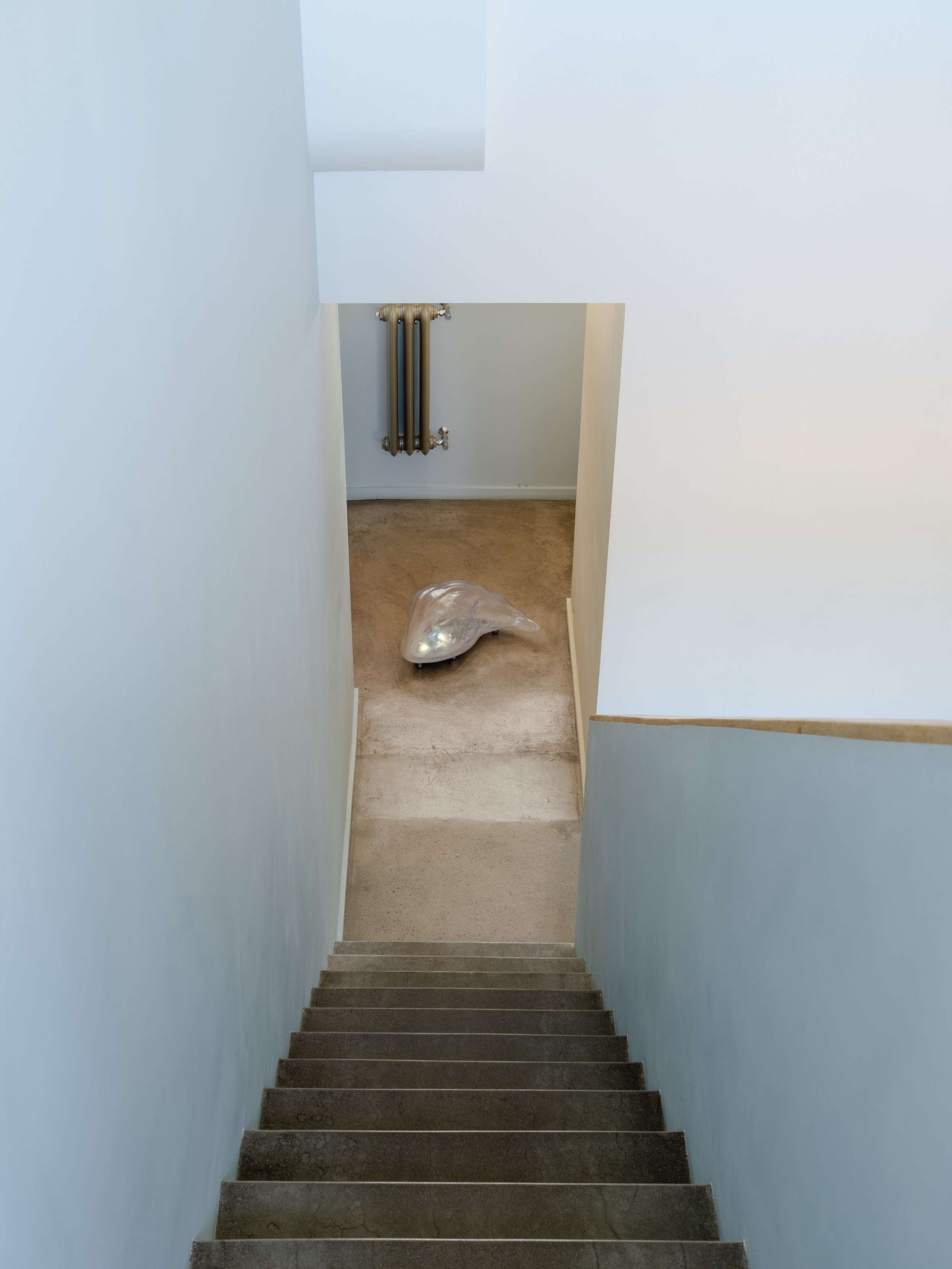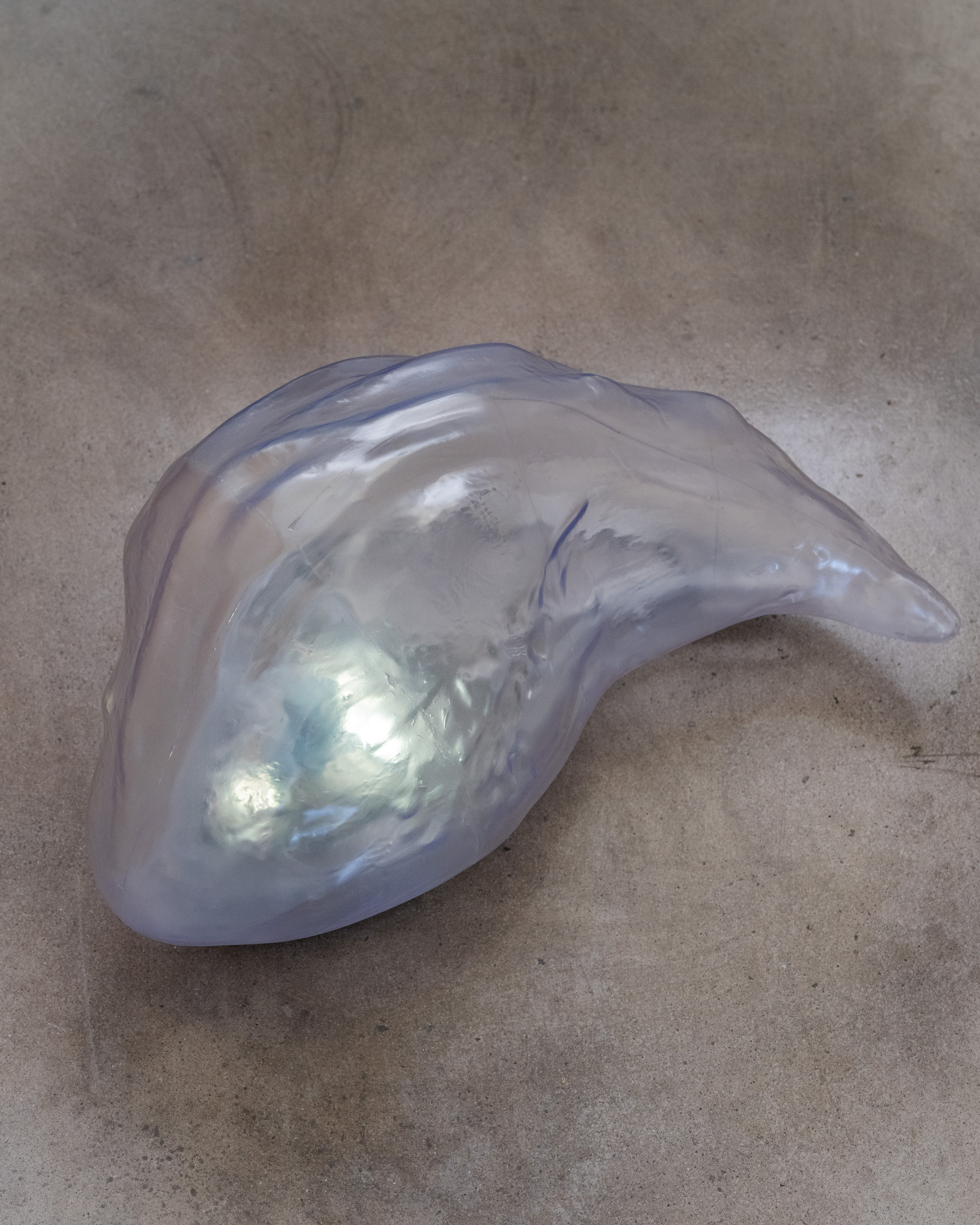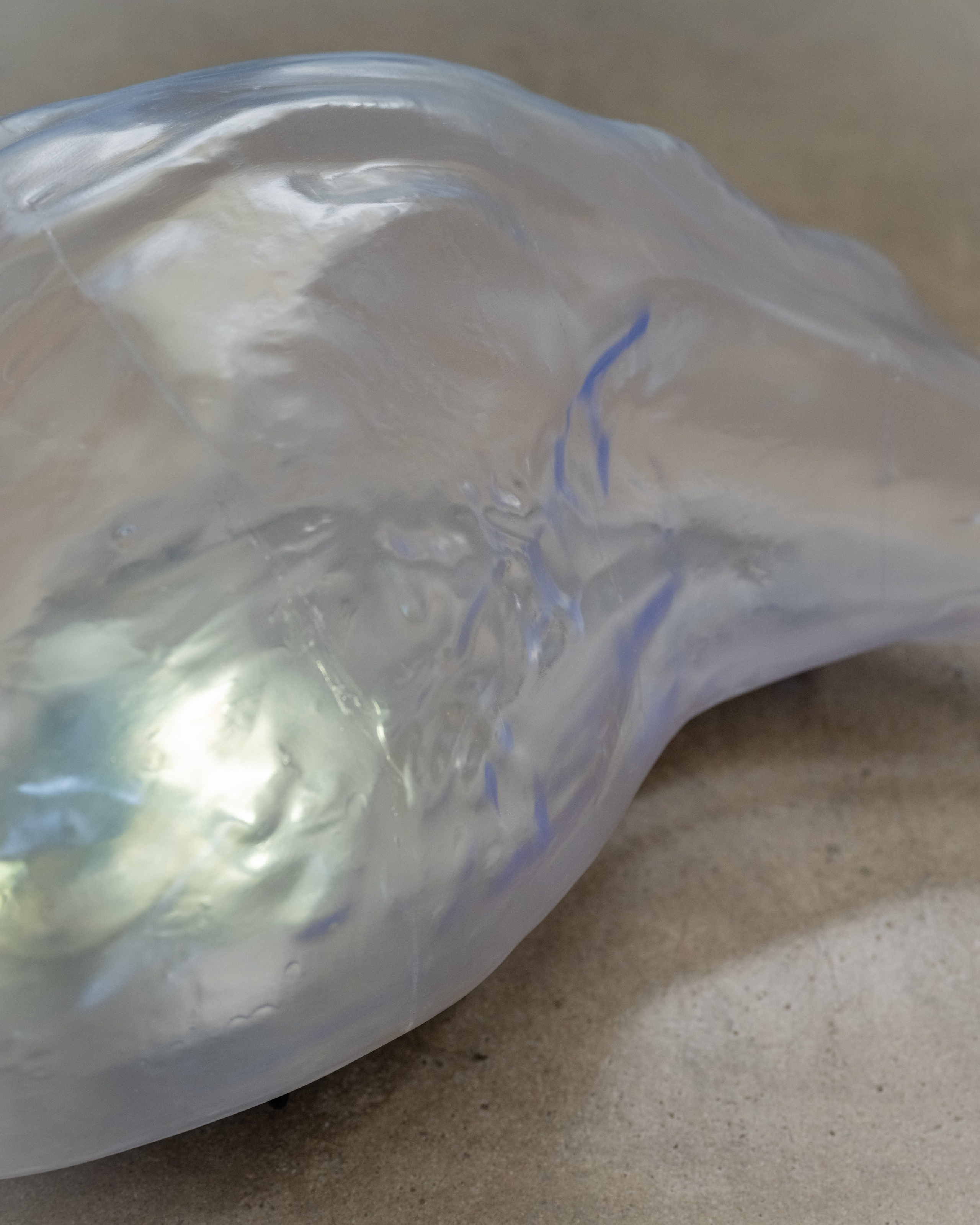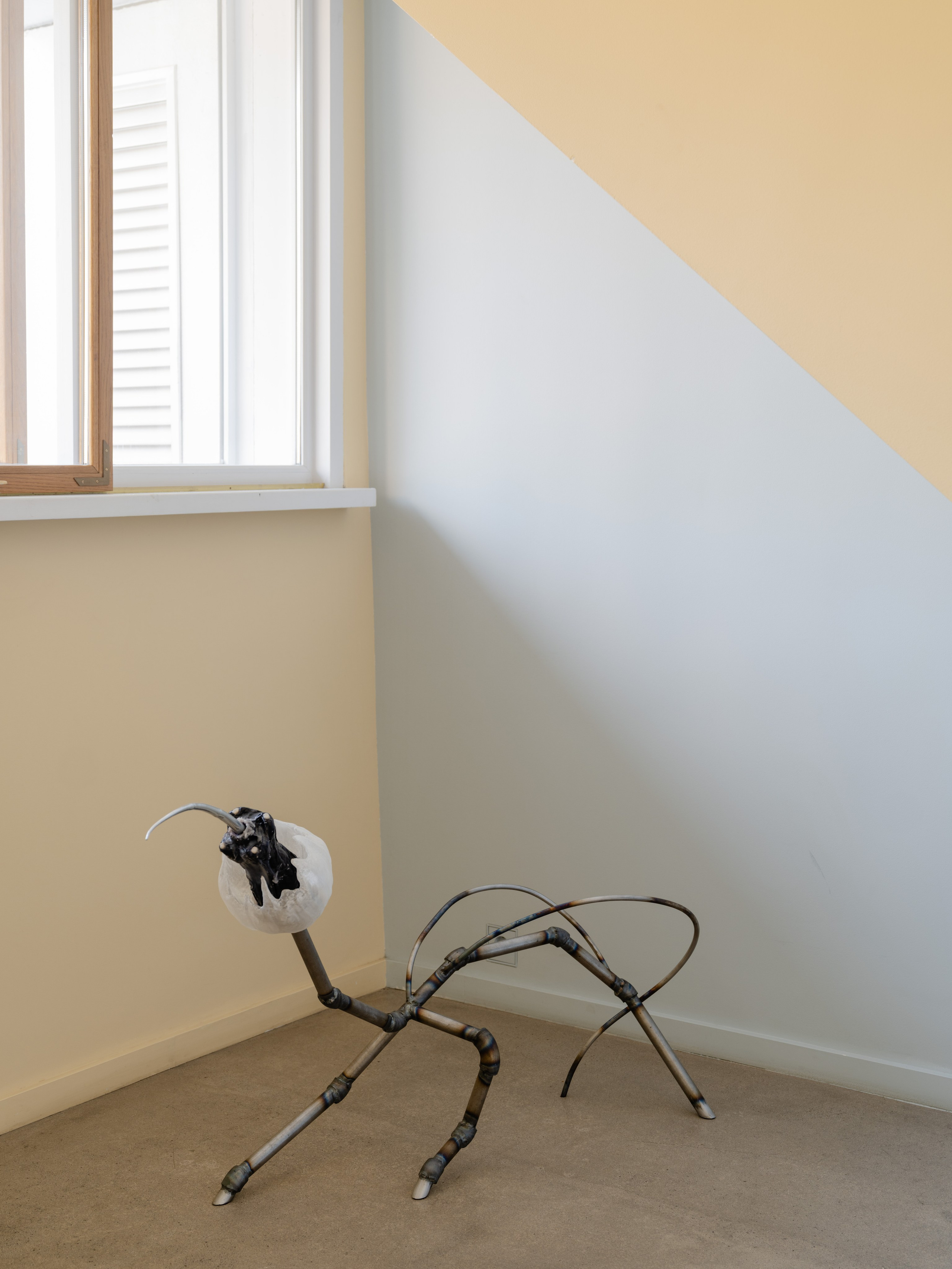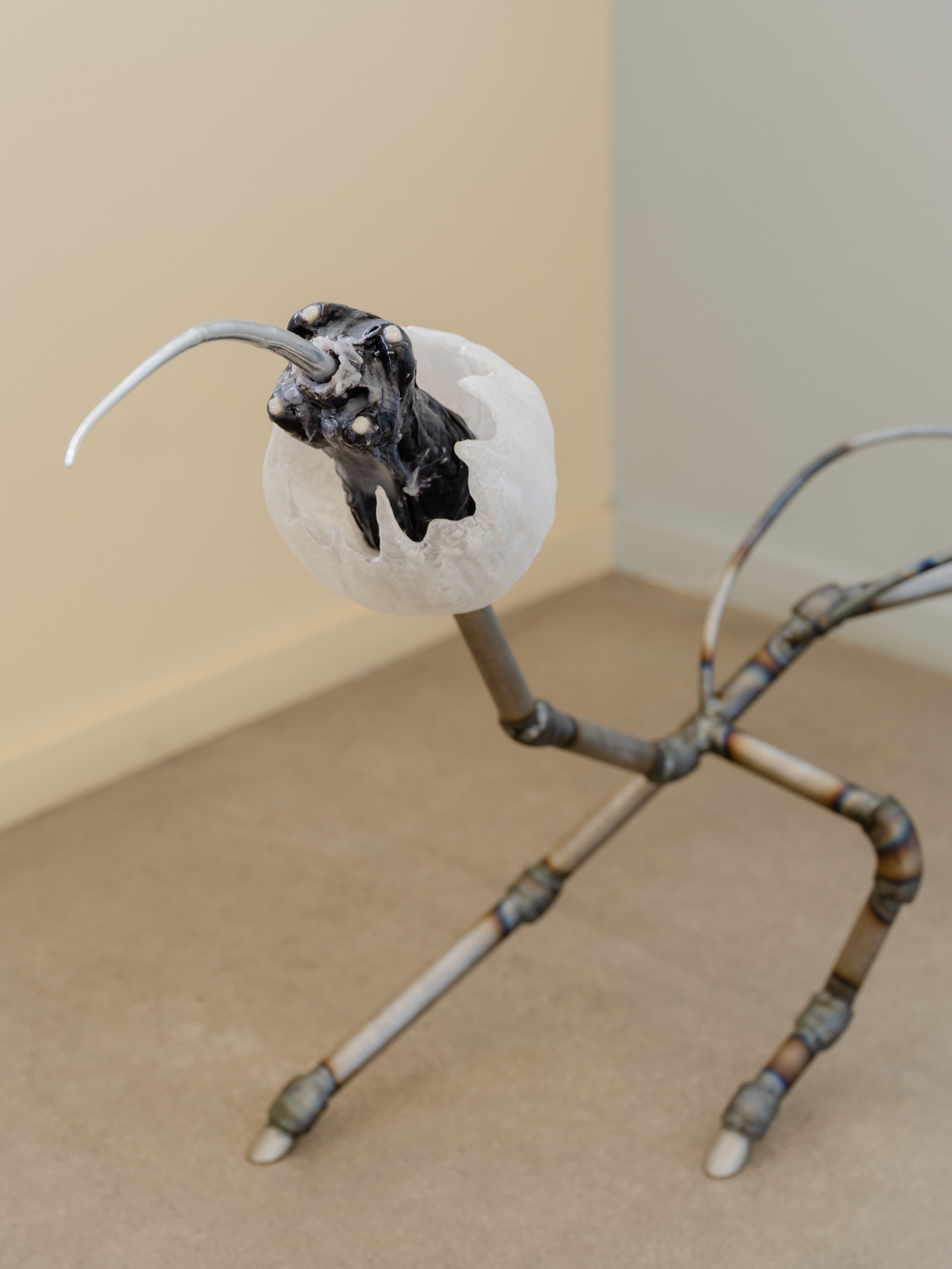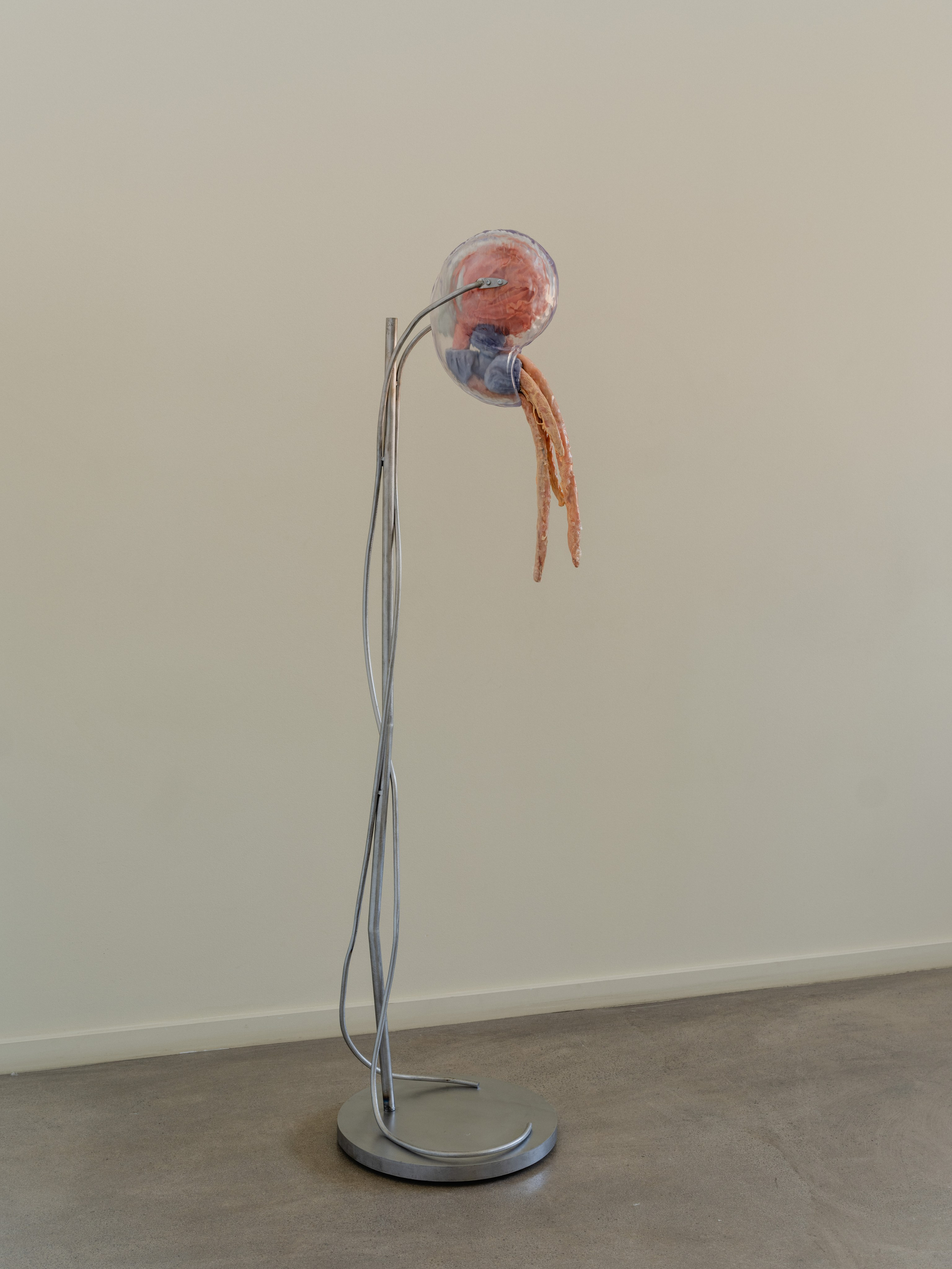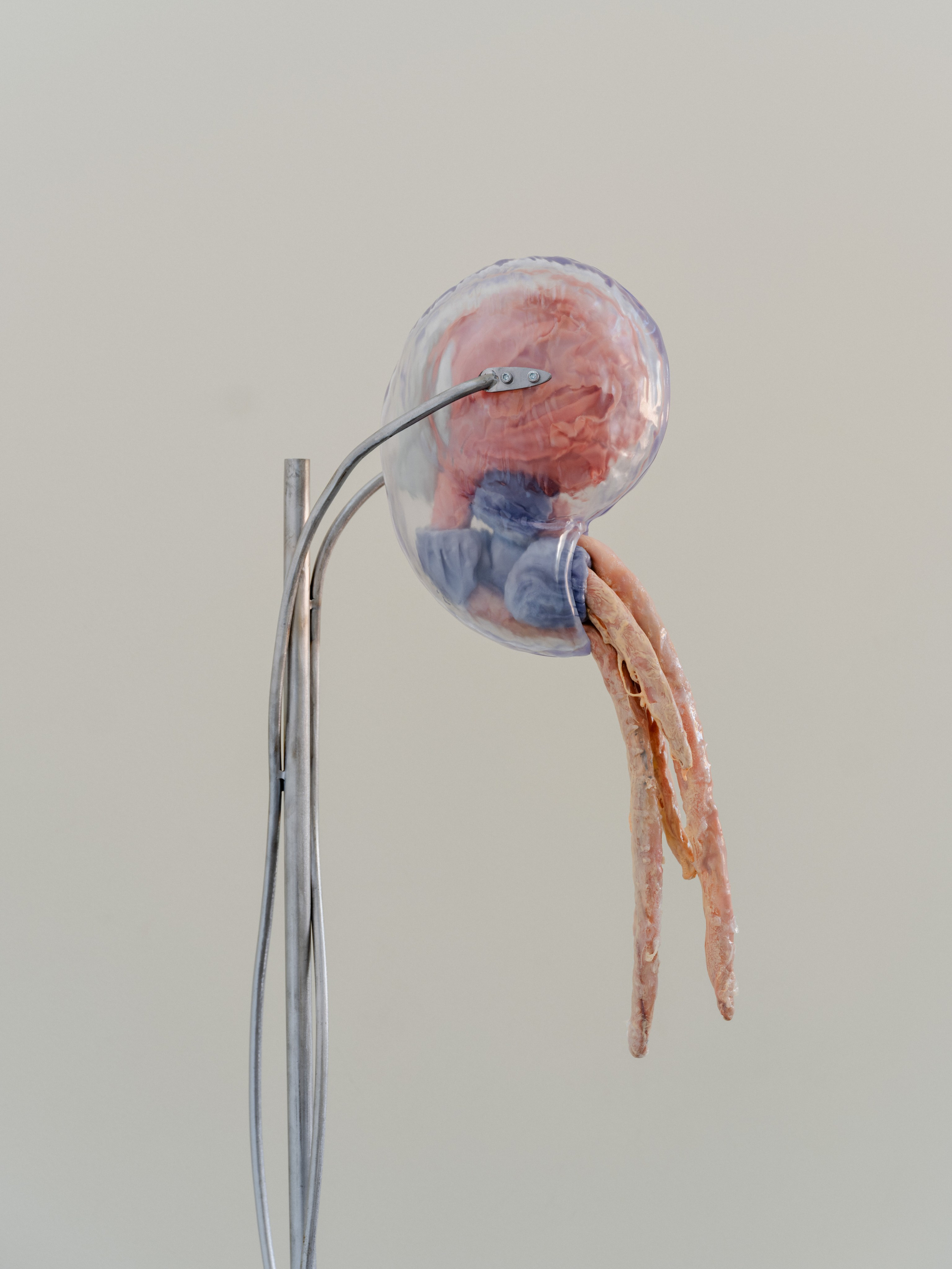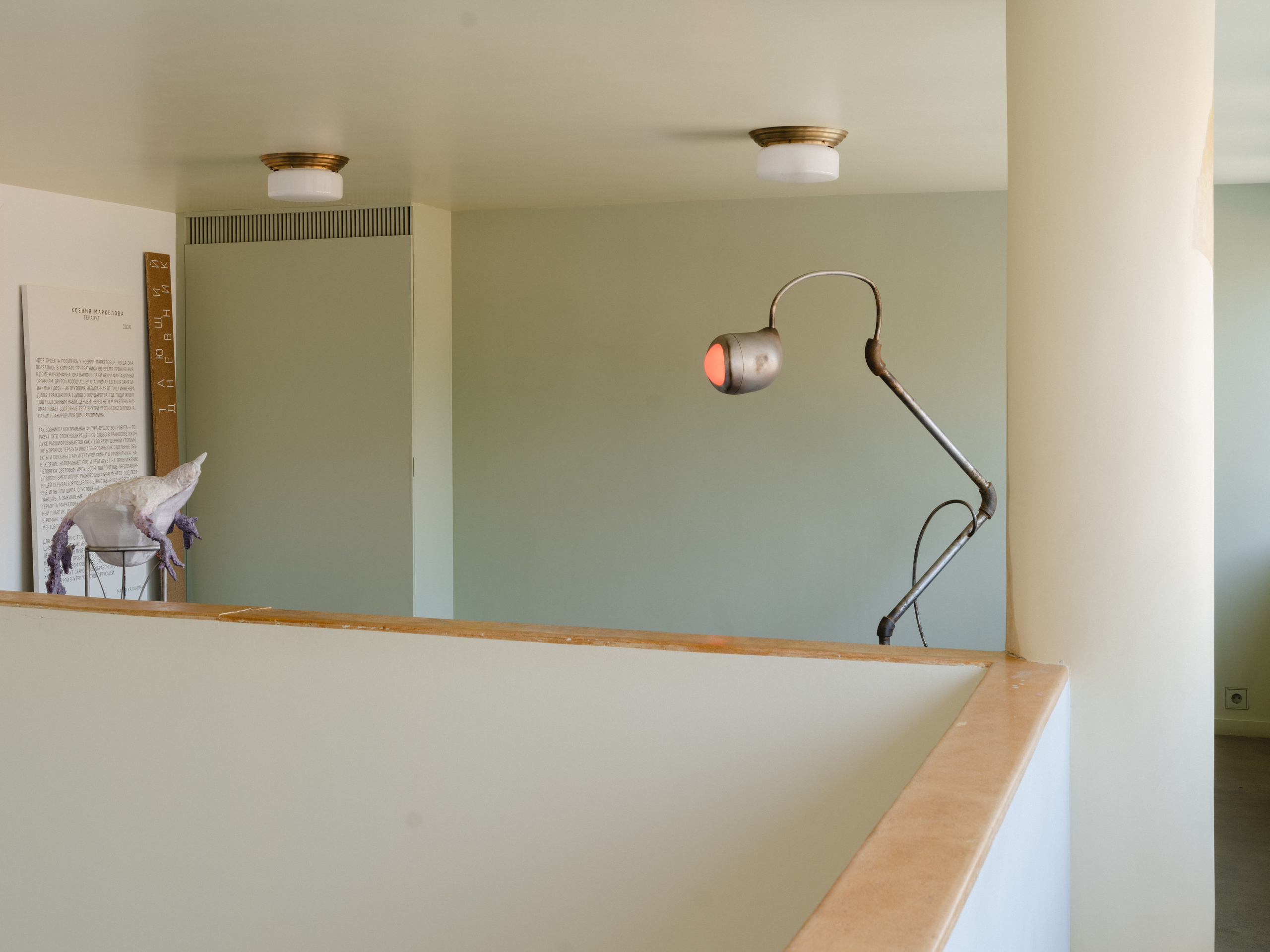

“TERAZUT” installation, part of the “Melting Diary” project, Narkomfin Building, June 3 — October 18.
The project originated with Ksenia Markelova during her residency at the Narkomfin Building; she found herself in the doorkeeper’s room, which reminded her of a fantastical organism. Another point of reference was Yevgeny Zamyatin’s novel “We” (1920)—a dystopia narrated by the engineer D-503, a citizen of the One State where people live under constant surveillance. Through this lens, Markelova examines the state of the body within the utopian project that the Narkomfin Building was originally intended to be. Thus emerged the project’s central figure—a creature named TERAZUT (a compound acronym in the early Soviet style, standing for “body of a destroyed utopia”). TERAZUT’s five organs are installed as distinct objects that interact with the architecture of the doorkeeper’s room. “Observation” resembles an eye and responds to a person’s approach with a pulse of light; “Absorption” serves as a receptacle for a variety of disparate fragments. “Suppression” lurks beneath the staircase, thrusting forward a needle- or spike-like protrusion. “Depletion” is a shell-like casing lying on the floor, while “Healing” takes the form of a seashell. To create TERAZUT’s organs, Markelova employed materials such as transparent photopolymer—mimicking the glass from which the city in the novel is constructed, as well as a key structural element of the Narkomfin Building itself. To facilitate an encounter with TERAZUT, the artist developed a “decoder"—an interactive interface that synthesizes the project’s fictional biology. Markelova views the Narkomfin Building as a space where utopian visions of a new society collided with the reality of the 20th century. TERAZUT embodies this collision, acting as an architectural form within the existing structure.